
 English
The Ultimate Density Monitor for Concrete Recycling
Engineered as the "smart brain" for modern concrete wastewater zero-discharge systems, this advanced density monitor redefines precision and sustainability in resource recovery. By accurately measuring complex, high-concentration slurries with 0.01% precision, it ensures optimal slurry concentration for concrete batching while maximizing the extraction of valuable fine sand. Its robust, maintenance-free design and clog-free straight tube structure guarantee uninterrupted operation in the harshest recycling environments. Ultimately, this device empowers concrete plants to achieve true zero solid waste discharge and seamless water recycling, turning environmental compliance into a highly efficient, automated, and profitable production loop.
>> Key Performance Advantages
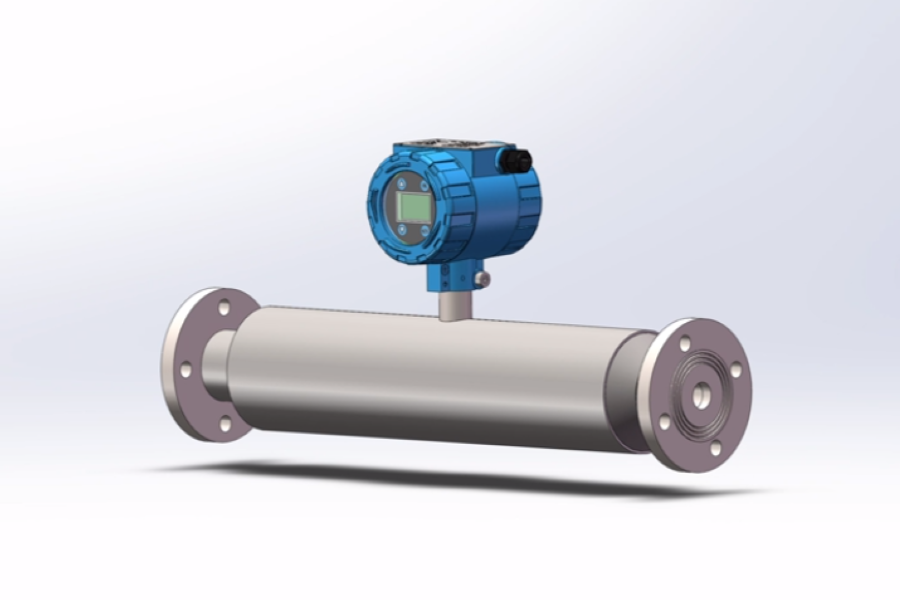
Single straight tube structure, no pressure loss. No clogging, wear resistance, corrosion resistance, easy to clean;
Can measure slurries containing a large number of bubbles and slurries containing crystal particles, as well as high-concentration industrial and mining, to solve the problems of gas, crystallization and high concentration in the current market;
Real-time monitoring and display of density, concentration and temperature values, 0.01% continuous measurement, can achieve rapid control when the process changes.
The outer shell is made of 316 stainless steel and alloy material, with better corrosion resistance and wear resistance.
The one-piece fully welded process is suitable for various harsh working conditions, long life, and maintenance-free.
>> How It Works
A portion of the measuring tube is excited to vibrate and maintain its inherent vibration frequency through an electrical feedback drive system. Changes in the vibrating mass will change the resonant frequency when the sensor is received. The mass of the vibrating tube consists of two parts: the weight of the vibrating tube itself and the mass of the liquid in the vibrating tube. The mass of the vibrating tube itself has been set before leaving the factory, so the mass of the liquid in the vibrating tube is determined by the density or concentration of the liquid in the tube and the volume of the liquid. If the size and volume of the tube are quantitative, the concentration of the liquid in the tube is a variable, and the density or concentration of the liquid in the tube is related to the vibration frequency. The signal is output to the processing unit through the rear electrical connector. The algorithm used by the processing unit includes temperature (integrated into the instrument), pressure, viscosity and frequency displacement to determine the concentration of the measured liquid.